When you’re choosing an underground utility partner in Houston, look for verified licensing (Texas General Contractor, Master Plumbing, and Fire Sprinkler RME-Underground), a documented safety record, proven experience on projects like yours, financial and schedule reliability, and a contractor who works as a long-term partner rather than a one-off subcontractor. Get these right and you protect your schedule, budget, and inspection outcomes.
Why the underground utility partner you pick matters
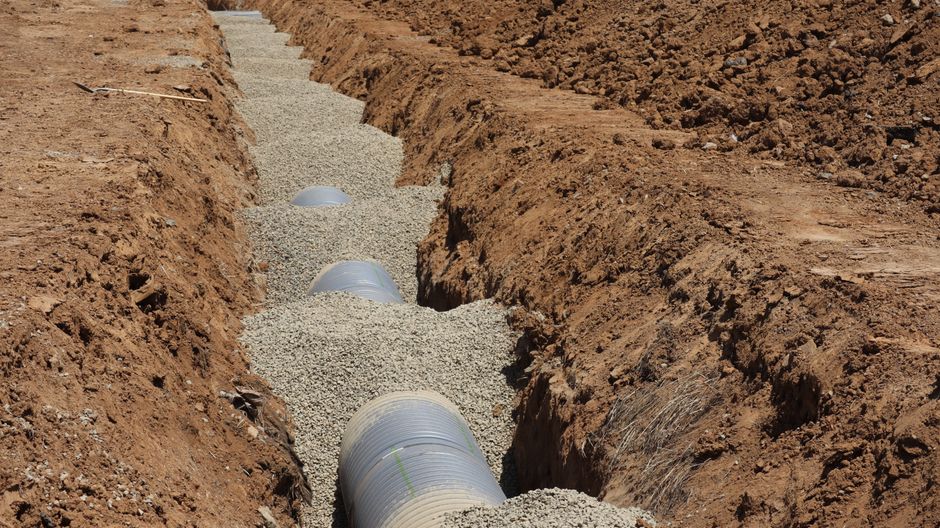
Underground work happens first and sits beneath everything else. If domestic water, fire water, sanitary, or storm systems go in wrong, the fix is expensive, disruptive, and often means tearing up finished work.
For commercial, industrial, municipal, and data center projects across Houston, Harris County, and Montgomery County, the right contractor keeps you on time and on budget while delivering code-compliant work built to last. The wrong one creates rework, failed inspections, and change orders that ripple through the entire schedule.
What to look for in an underground utility contractor
1. Verify licensing and credentials
Licensing separates qualified utility contractors from general excavators. Confirm the credentials that actually govern this scope of work before you sign.
- Texas General Contractor — authority to perform the civil and construction scope.
- Master Plumbing license — required for water and sanitary sewer connections.
- Fire Sprinkler RME-Underground — required for underground fire water systems.
Ask for license numbers and confirm they cover domestic and fire water, sanitary, and storm systems. A partner who holds all three under one roof reduces coordination gaps and finger-pointing between trades.
2. Review the safety record
Safety performance is a direct indicator of how a crew runs a jobsite. Ask for the contractor’s EMR, OSHA 300 logs, and their approach to trenching, shoring, and confined-space work.
A strong safety culture protects your people, your schedule, and your insurance exposure. Contractors who cut corners on safety cut corners elsewhere.
3. Confirm relevant project experience
Match the contractor’s history to your project type. Installing utilities for a data center campus is not the same as a retail pad site, and industrial systems carry demands a residential-focused crew won’t be ready for.
Ask for recent references on commercial and industrial utility infrastructure comparable in size, scope, and complexity to yours.
4. Assess schedule and budget reliability
Underground is on the critical path. Look for a contractor who commits to realistic durations, communicates delays early, and has the crews and equipment to hold the line.
Ask how they handle unforeseen conditions — rock, groundwater, utility conflicts — and how those get priced and documented before work proceeds.
5. Look for a partnership mindset
The best utility contractors think past the current job. They flag design conflicts during preconstruction, coordinate with other trades, and stand behind their work.
That partnership approach turns one project into a repeatable, predictable process across your portfolio.
Questions to ask before you award the work
- Which licenses do you hold, and do they cover domestic water, fire water, sanitary, and storm?
- What is your current EMR, and can I see your OSHA logs?
- Can you provide references on projects like mine in the Houston area?
- How do you document and price changed conditions?
- Who is my day-to-day point of contact, and how is coordination handled?
- How do you handle inspections and code compliance with local authorities?
Full-service utility contractor vs. single-trade sub
| Factor | Full-service utility partner | Single-trade subcontractor |
|---|---|---|
| Scope coverage | Water, fire water, sanitary, storm under one contract | One system; multiple contracts to coordinate |
| Licensing | GC, Master Plumbing, Fire Sprinkler RME | Often limited to one discipline |
| Coordination | Single accountable point of contact | Owner or GC manages the gaps |
| Change management | Unified pricing and documentation | Multiple sources, higher dispute risk |
| Schedule risk | Consolidated critical-path control | Handoffs create delay points |
Local knowledge matters in Houston and surrounding counties
Utility work in Houston, Harris County, and Montgomery County means dealing with local inspection processes, high groundwater, and specific municipal requirements. A partner who works this market regularly knows the authorities having jurisdiction and the site conditions before mobilization.
That familiarity prevents inspection delays and keeps your project moving.
FAQ
What licenses should an underground utility contractor in Texas hold?
Look for a Texas General Contractor license, a Master Plumbing license for water and sanitary connections, and a Fire Sprinkler RME-Underground designation for fire water systems. Holding all three under one contractor reduces coordination gaps.
Why is underground utility work considered critical-path?
Utilities go in first and beneath everything else. Delays or errors below grade push back every trade that follows and often require tearing up completed work to correct.
What should I ask about a contractor’s safety record?
Request the current EMR, OSHA 300 logs, and their procedures for trenching, shoring, and confined-space entry. A documented safety culture reflects how disciplined the crew is overall.
Is it better to hire one full-service utility contractor or separate subs?
A single full-service partner covering water, fire water, sanitary, and storm gives you one accountable point of contact, unified change management, and fewer coordination gaps than managing multiple single-trade subs.
Partner with a Texas underground utility contractor built for your project
American Underground Services delivers commercial and industrial utility infrastructure across Houston, Harris County, and Montgomery County — where utility meets reliability. Contact our team to discuss your project scope and request a proposal for your next build.