Open-cut is the right method when you have clear surface access and no critical obstacles to cross; trenchless methods like horizontal directional drilling (HDD) or jack and bore make sense when you need to install utilities under a road, railway, waterway, or active facility without disturbing the surface. The decision comes down to depth, soil, crossing type, and how much surface disruption your Houston project can tolerate.
What is the difference between open-cut and trenchless installation?
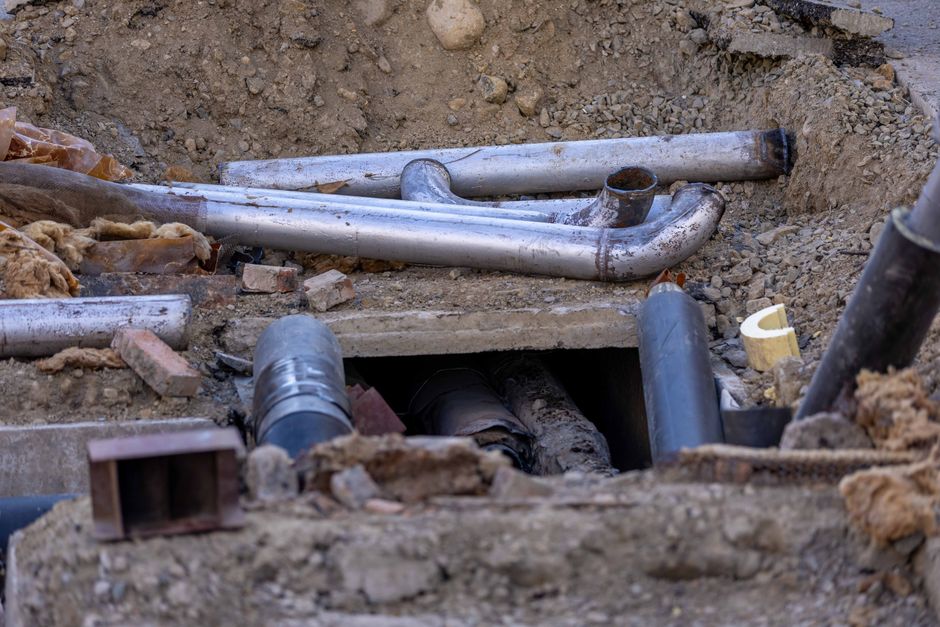
Open-cut (or open-trench) excavation means digging an open trench from the surface, laying the pipe, then backfilling and restoring. It is direct, allows full inspection of the pipe during install, and is usually the most efficient approach on open ground.
Trenchless installation places pipe underground without a continuous open trench. Instead, crews drill or bore from a launch pit to a receiving pit, keeping the surface above largely intact. On commercial and industrial utility infrastructure across Harris and Montgomery County, we use both — the method follows the site conditions, not the other way around.
When does open-cut make sense?
Open-cut is typically the practical choice when the corridor is open and shallow crossings are involved.
- Clear surface access with no roads, rail, or structures to protect.
- Shallow to moderate depths where excavation and shoring are manageable.
- Large-diameter or gravity systems that require precise grade, such as sanitary and storm sewer collection lines.
- Multiple connections or fittings along the run that need open access.
- Sites where surface restoration is straightforward and disruption is acceptable.
Gravity sewer work often favors open-cut because maintaining consistent slope is easier when the pipe is placed in an open, inspected trench.
When should you use HDD (horizontal directional drilling)?
HDD is the trenchless method of choice for longer crossings and pressure pipe that can follow a curved path. A steerable drill head bores a pilot hole along a designed profile, the bore is reamed to size, and the product pipe is pulled back through.
Consider HDD when your project involves:
- Crossing under waterways, wetlands, or environmentally sensitive areas.
- Long crossings under highways or wide corridors.
- Pressure systems such as domestic and fire water lines that don’t require fixed gravity grade.
- Congested sites where you need to avoid existing utilities and surface features.
- Deeper installs that would require extensive shoring by open-cut.
HDD works well in cohesive and mixed soils common around Houston, though rock and unstable conditions require careful planning and the right drilling fluids.
When is jack and bore the better trenchless method?
Jack and bore (auger boring) is well suited to shorter, straight crossings that demand strict line and grade — most often under roadways and railroads. A steel casing is jacked through the soil while an auger removes spoil, and the carrier pipe is installed inside the casing.
Jack and bore is the strong option when you need:
- A straight, precise crossing under a highway, rail line, or levee.
- Grade control for gravity sewer where slope matters.
- A protective casing required by TxDOT, railroad, or utility owner specifications.
- Shorter spans where a launch and receiving pit are practical.
Because it maintains tighter tolerances than HDD, jack and bore is often specified where a road or rail authority requires cased crossings built to exact alignment.
Open-cut vs. HDD vs. jack and bore: a quick comparison
| Factor | Open-Cut | HDD | Jack & Bore |
|---|---|---|---|
| Surface disruption | High | Low | Low |
| Best for | Open corridors, connections | Long or curved crossings | Straight road/rail crossings |
| Grade precision | High | Moderate | High |
| Typical pipe | Gravity & pressure | Pressure (water, fire) | Gravity & cased carrier |
| Crossing under road/rail | Not preferred | Yes | Yes, often required |
| Path shape | Straight | Curved possible | Straight |
How the method affects your schedule and cost
Trenchless methods reduce surface restoration, traffic control, and permitting friction on busy Houston corridors, which can protect your schedule even when the boring itself is more involved. Open-cut can move faster on open ground but adds restoration, shoring, and dewatering where conditions are poor.
The best answer usually comes from a site-specific review: geotechnical data, utility locates, depth of cover, crossing permits, and the surface owner’s requirements. Choosing the method early — during design — keeps the work code-compliant and built to last, and keeps the project on time and on budget.
How American Underground Services approaches the decision
Our leadership team brings over 40 years of combined experience in commercial and industrial utility construction across Texas. We hold Texas General Contractor, Master Plumbing, and Fire Sprinkler RME-Underground credentials, and we evaluate every crossing on soils, depth, grade needs, and surface constraints before we commit to a method.
For data center, municipal, industrial, and commercial clients in Houston, Harris County, and Montgomery County, that means the installation method matches the site — safety first, on schedule, and inspection-ready.
FAQ
Is HDD or jack and bore better for crossing under a highway?
Both work, but jack and bore is often required by road and rail authorities because it installs a straight, cased crossing to exact line and grade. HDD suits longer or curved crossings and pressure pipe.
Can trenchless methods be used for sewer lines?
Yes. Jack and bore is commonly used for gravity sewer crossings because it holds precise grade. HDD is better suited to pressure lines like water and fire mains that don’t require fixed slope.
Which method causes the least surface disruption?
Both HDD and jack and bore keep the surface largely intact, making them ideal under roads, rail, and active facilities. Open-cut disturbs the full corridor and requires surface restoration.
How do you decide between open-cut and trenchless?
It depends on surface access, depth, soil conditions, crossing type, grade requirements, and permitting. A geotechnical and site review during design determines the safest, most efficient method.
Do you serve areas outside Houston?
Yes. American Underground Services works across Houston, Harris County, Montgomery County, and the broader Texas market for commercial, industrial, municipal, and data center clients.
Planning a utility crossing in the Houston area? Contact American Underground Services to review your site and get the right open-cut, HDD, or jack and bore approach for your project.